Monday, October 13, 2008

October Book of the Month: Imagine


Imagine by Alison Lester is the beautifully illustrated adventure of two children as they “visit” exotic spots around the planet using cardboard boxes, blocks, plastic animals, sheets, flashlights, and other common play items to construct concrete representations of the real world. Through the familiar rhythm of a repeating line, “Imagine if…,” this stimulating picture book invites the reader to journey deep into the jungle, under the sea, in a land of ice and snow, on a farm, in the moonlit bush, on an African plain, and in a prehistoric swamp. Then, with the turn of a page, the reader finds all the animals living there!

I chose Imagine for our October Book-of-the-Month because of its vivid language and detailed descriptions of sounds and images in the natural world. As we conclude our K-5 Narrative Genre study in October, students will be shown models of descriptive language and be “nudged” to include sensory details and concrete language in their own stories as they revise their drafts in Writers Workshop. Alison Lester demonstrates for young writers the use of details in language and in pictures to tell a powerfully imaginative story and introduce rich vocabulary to readers.

INSTRUCTIONAL STRATEGIES:
PLS: Reading Standard 2: Comprehension/NSPS: Reading Standard E1b
K/1 (Reading Standard 2: Comprehension - retell the story)
After hearing Imagine read aloud and having a discussion about the words and pictures, each class will produce a re-telling of the story. Using a large sheet of chart paper, facilitate the writing of a shared, whole group, interactive piece to be displayed on the standards-based bulletin board outside your classroom with teacher commentary. You may wish to invite students to create illustrations to accompany the class retelling. A completed shared, interactive writing with Ms. Haines’ Kindergarten writers is available to view as a model and will be on display outside her classroom.

2/3 (Reading Standard 2: Comprehension – extend the story) This is an element of the first grade reading standard that is being revisited.
After hearing Imagine read aloud and having a discussion about the words and pictures, each class will produce a re-telling of the story and at least 2-3 extensions using original ideas (i.e. Imagine if we were lost in the swamp where alligators snap and mosquitoes bite, where frogs croak and fireflies light.) Using a large sheet of chart paper, facilitate the writing of a shared, whole group, interactive piece to be displayed on the standards-based bulletin board outside your classroom with teacher commentary. You may wish to invite students to create illustrations to accompany the class retelling (especially the original extensions).

4/5 (Elb The student produces evidence of reading by making perceptive and well developed connections)
After hearing Imagine read aloud and having a discussion about the author’s craft (i.e. repeating line, vocabulary as border) and why Alison Lester chose to use the identified craft in her text and illustrations, model a “perceptive and well developed connection” that you made as you read the story (i.e. Text-to-Self: Alison Lester’s descriptions of prehistoric dinosaurs and illustration of the children dressing up remind me of a Halloween when my 4-year old daughter, Anisa, dressed up in the family’s hand-stitched, hand-me-down blue and yellow T-Rex costume. It must have been the "Year of the Dinosaur" that Halloween as we encountered every possible dinosaur from the movie, The Land Before Time, on every corner of our neighborhood.)

Sunday, October 5, 2008

Students Share Their Voice

At our September 26th weekly Flag Raising Ceremony, the address to students focused on three aspects of citizenship: 1) Know what is important in your neighborhood, school, and community; 2) Listen, read and think about everyone's opinion respectfully even if it doesn't match your own; and 3) Do something to make your neighborhood, school, and community a better place!

The Flag Raising Ceremony ended with an invitation to all students to think about something that matters in their neighborhood, school, and community and then write a letter expressing their opinion. I told our Mayport Elementary students that this is one way that citizens make their voices heard. The plan that I shared with our Mayport students was to send every letter that I received to our local newspapers. Each letter would definitely get read by the editor. They may even get published!

On Monday, the following letter was delivered by a first grade teacher who shared that Cecilia walked into class and announced that she needed to see the principal immediately. After asking why this was necessary, Cecilia explained that she had written a letter and had to give it to the principal right away! The text of her letter reads:


I was delighted to see a first grade student so engaged as a citizen and eager to respond to a call to action. Her concern for the environment is heartfelt and expresses to readers exactly what they can do to help-"Pic-up litr."

This letter reveals the degree to which our children are in tune with the world around them and have significant thoughts to share. I am so very proud of the students at Mayport Elementary who chose to exercise their citizenship last week by voicing their concerns about their neighborhoods, school, and community using the power of the written word.

K-5 Responses to The Spyglass by Richard Paul Evans


Monday, September 22, 2008

Google Docs Rock the Imagination!

At exactly 7:12 a.m. last Thursday I decided to undertake the journey into the unknown but intriguing world of sharing documents online...with the entire planet! I finally had a reason and a chunk of time for a trial-and-error learning session. The reason? The Mayport Faculty had experienced a power packed Web 2.0 Presentation by our Chief Technology Officer, Dr. Terri Stahlman, the week before. She appropriately closed with the promise, "...and I'm sure that you'll be able to access a copy of this power point on Yvonne's blog so that you can explore these resources and connect them to your classroom and instructional work..." Okay then. It was time to publish my first document. I knew enough about this from my colleague, Melanie Holtsman, that it could not be done with the simple "attach document" function that is used with email. "Google docs," "upload," and "html code" were a few key phrases that kept appearing in my conscious thoughts from her patient tutoring. I leafed through my notebook to find the synopsis of my Blogging 101 session.

Then, at 7:12 a.m. I launched my online exploration and application and by 7:26 a.m. the Power Point Presentation was published as a Google doc on the web! Fourteen minutes is exceedingly speedy for a novice learner, a digital immigrant. It demonstrates the power, ease, and accessibility of Web 2.0 tools. It increases my determination as an instructional leader to ensure that every student has access to and knows how to use these tools in meaningful ways. My imagination cannot even begin to encompass all of the ways in which this Web 2.0 tool can impact instruction!

Web 2.0 Faculty Presentation by Dr. Terri Stahlman

Wednesday, September 17, 2008

True Joy - True Purpose


This is the true joy in life, the being used for a purpose recognized by “yourself as a mighty one”; the being a force of nature instead of a feverish little clod of ailments and grievances complaining that the world will not devote itself to making you happy; I want to be thoroughly used up when I die, for the harder I work the more I live. I rejoice in life for its own sake. Life is no “brief candle” for me. It is a sort of splendid torch which I have got hold of for the moment, and I want to make it burn as brightly as possible before handing it on to future generations.
-Bernard Shaw, Man and Superman, 1903, p. ii

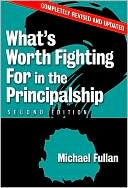
This quote resonated with me when I read it in Michael Fullan's new book What's Worth Fighting For in the Principalship and then shared it with the Mayport faculty and staff in our September 12th Memo. It is always a joy to think about why I chose to be an educator, directly working with future generations. How lucky I am to experience purpose, mindfulness, and joy in every single day!

Tuesday, September 9, 2008

Countdown to Florida Writes!


As Mayport students begin to learn how to craft their writing in Kindergarten through fifth grade following the elements of our writing standards in Writers Workshop, they are preparing for success on this vital assessment.
Talk to your fourth grader about what they are writing as they learn how to incorporate the following 4th grade narrative writing standard elements in their work. Narrative Writing is the first unit of K-5 writing instruction this year:
  • Engages the reader by establishing a context, creating a point of view, or otherwise developing reader interest;
  • Establishes a point of view, plot, setting, and conflict (and for autobiography the  significance of events);
  • Creates an organizing structure;
  • Includes sensory details and concrete language to develop plot and character;
  • Excludes extraneous details and inconsistencies;
  • Develops complex characters;
  • Uses a range of appropriate strategies such as dialogue and tension or suspense;
  • Provides a sense of closure to the writing.